


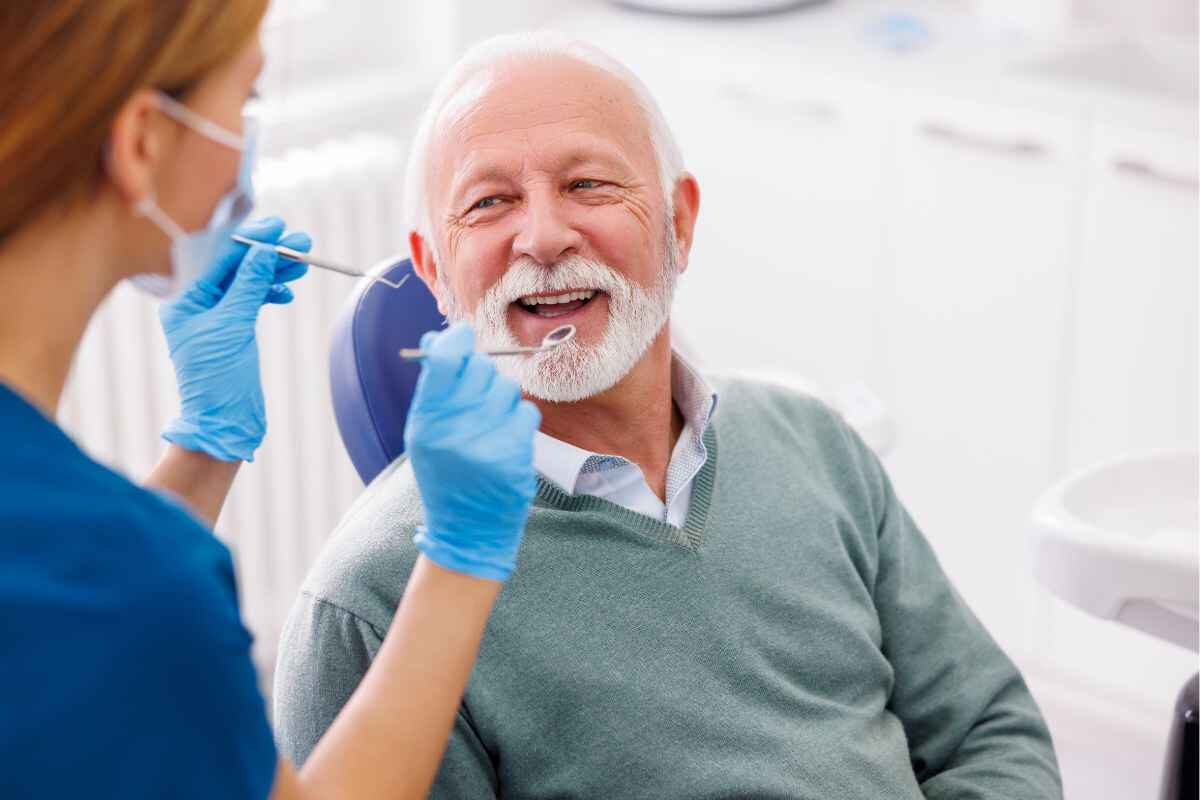
After age 60, oral health needs begin to shift in noticeable and important ways. Years of normal wear affect enamel strength. Gums gradually recede. Saliva production often decreases due to medications. The risk of root cavities, gum disease, tooth loss, and oral cancer increases. Existing dental work may also begin to fail after decades of use.
Dental care for elderly persons focuses less on cosmetic concerns and more on preserving function, preventing infection, and managing age-related changes early. Maintaining oral health after 60 requires closer attention to gum health, fluoride protection, dry mouth management, and regular screenings.
What Commonly Changes After 60 and What to Watch For.
Enamel Thins and Teeth Become More Sensitive
Tooth enamel gradually wears down over time. Years of chewing, brushing, acidic beverages, and temperature changes slowly reduce its thickness. As enamel thins:
- Teeth may appear more yellow
- Sensitivity to cold or sweets increases
- Small cracks or chips become more common
When enamel weakens, the inner dentin layer becomes exposed. This makes teeth more vulnerable to decay and discomfort.
Using fluoride toothpaste for sensitive teeth, avoiding aggressive brushing, and routine dental exams can help protect aging enamel. Early attention prevents minor wear from progressing into fractures or infections.
Gum Recession Exposes Tooth Roots
Gum recession in older adults is one of the most noticeable changes after 60. As gums gradually pull back, the root surfaces of teeth become exposed.
Unlike enamel, roots do not have a strong protective outer layer. This makes them highly susceptible to:
- Root cavities
- Increased sensitivity
- Bacterial buildup along the gumline
Root decay in seniors can progress quickly, especially when combined with dry mouth or difficulty maintaining daily oral hygiene.
Gentle brushing along the gumline and daily flossing are essential. If teeth appear longer or feel sensitive near the gums, it may indicate recession that needs professional evaluation.
Dry Mouth Becomes More Common
Many adults over 60 take medications for blood pressure, heart conditions, diabetes, allergies, or anxiety. A frequent side effect is reduced saliva flow.
Saliva plays a protective role in oral health. It:
- Neutralizes acids
- Washes away bacteria
- Supports healthy soft tissue
When saliva decreases, the risk of cavities and gum disease rises significantly. Dry mouth symptoms include:
- Sticky or dry feeling
- Frequent thirst
- Difficulty swallowing dry foods
- Burning sensation in the mouth
In Central Texas, warm weather can make dry mouth even more noticeable. Drinking water throughout the day, using alcohol-free mouth rinses, and chewing sugar-free gum can help stimulate saliva. Persistent dry mouth should be evaluated because it accelerates dental problems after 60.
Gum Disease Progresses More Quietly
Periodontal disease becomes more common with age, but it may not always cause obvious pain. In fact, bleeding may decrease even when infection is present.
Warning signs include:
- Persistent bad breath
- Loose teeth
- Gum recession
- Changes in bite alignment
- Dentures that no longer fit properly
Chronic health conditions such as diabetes can increase inflammation and slow healing. The connection between diabetes and oral health is well established. Elevated blood sugar levels can worsen gum disease, while untreated gum disease can make blood sugar harder to control.
Regular professional cleanings and periodontal evaluations are critical parts of senior dental care in Waco. Early intervention helps prevent tooth loss and bone damage.
Increased Risk of Root Cavities
Cavities in younger adults typically form on the chewing surfaces of teeth. After 60, decay often develops along exposed roots near the gumline.
Root cavities spread faster because the root surface is softer than enamel. Dry mouth and gum recession further increase the risk.
Daily fluoride use and routine dental visits help detect and manage root decay before it becomes extensive.
Tooth Loss Is Not Inevitable but Risk Increases
Tooth loss after 60 most often results from advanced gum disease or untreated decay. When a tooth is lost, neighboring teeth shift, chewing becomes uneven, and jawbone density gradually decreases.
Tooth replacement options for seniors include:
- Partial dentures
- Full dentures
- Implant-supported dentures
- Dental implants
Dental implants for seniors are often possible when overall health and bone support are adequate. Modern solutions provide more stability and comfort than older removable appliances.
Replacing missing teeth supports proper nutrition, speech clarity, and jawbone health.
Oral Cancer Risk Rises With Age
The risk of oral cancer increases after 60, particularly among individuals with a history of tobacco or heavy alcohol use.
Early oral cancer may not cause pain. Symptoms to monitor include:
- Sores that do not heal
- Red or white patches
- Difficulty swallowing
- Lumps or thickened areas inside the mouth
Routine oral cancer screenings are quick and non-invasive. Early detection significantly improves treatment outcomes.
Aging Dental Work May Need Attention
Many seniors have crowns, bridges, or fillings that were placed years ago. Dental materials do not last forever.
Over time, restorations may:
- Crack
- Loosen
- Develop leakage around edges
When bacteria enter beneath aging dental work, infection can develop without obvious symptoms. Evaluating older restorations helps prevent more complex procedures later.
How Preventive Dental Care Should Adapt After 60
Dental care after 60 should focus on consistency and early detection. Important habits include:
- Scheduling routine cleanings and exams
- Addressing sensitivity promptly
- Monitoring changes in gum position
- Managing dry mouth effectively
- Maintaining daily brushing and flossing
Gentle technique matters more than force. Over-brushing can worsen gum recession and enamel wear.
For seniors in Waco, maintaining oral health also supports overall wellness. Healthy teeth contribute to balanced nutrition, clearer speech, and improved quality of life.
Protect Your Smile After 60 – Book Your Visit Today
If you are over 60 and want guidance on protecting your teeth and gums, Stonehaven Dental & Orthodontics in Waco provides comprehensive care tailored to older adults.Call our Waco office at 254.420.4211 to schedule your appointment.
Whether you need help managing dry mouth, treating gum recession, replacing missing teeth, or maintaining routine preventive care, our team is here to support your long-term oral health.
Frequently Asked Questions
1. Why do teeth become more sensitive after age 60?
Tooth sensitivity after 60 usually occurs because enamel naturally thins over time and gums begin to recede. When gum recession exposes the tooth roots, those areas are more sensitive to cold, heat, and sweets. Dry mouth caused by medications can also increase irritation. Using fluoride toothpaste for sensitive teeth and scheduling regular dental exams can help manage discomfort and prevent further enamel wear.
2. Is tooth loss a normal part of aging?
Tooth loss is more common in older adults, but it is not a normal or unavoidable part of aging. Most tooth loss after 60 results from untreated gum disease or advanced decay. With proper preventive care, routine cleanings, and early treatment of dental problems, many seniors maintain their natural teeth for life.
3. How does dry mouth affect seniors’ oral health?
Dry mouth (xerostomia) is common in adults over 60, often due to medications or chronic health conditions. Saliva protects teeth by neutralizing acids and controlling bacteria. When saliva decreases, the risk of root cavities, gum disease, and oral infections increases. Staying hydrated, using alcohol-free mouth rinses, and discussing persistent symptoms with a dentist can reduce complications.
4. How often should seniors schedule dental checkups?
Most seniors benefit from dental checkups and professional cleanings every six months. However, individuals with gum disease, dry mouth, diabetes, or extensive dental work may need more frequent visits. Regular exams allow early detection of root decay, gum recession, oral cancer, and aging dental restorations before they become serious problems.

Reviews From Our Patients
Krystle J.

Sammy, Connor, the front desk staff, Dental Hygenist and especially Dr. Town are amazing! It’s great to see the same faces everyone I get a cleaning! Sammy makes the experience comfortable and welcome. Connor may be quiet but he always does a great job! The dental hygienist always remembers me and my kids. Sorry I cant remember her name but she knows who I am and that’s what matters:) Thankful for this staff and the great care they give to my family!
Linda F.
I love it here. I have never seen a dental office give flowers to first timers. Everyone was so welcome if. In pain but you guys still made me smile. I told my daughter she need to come there. I love how you guys work with options of payment. Again thanks for making me smile in pain.
Emily C.
We’ve always had a good experience at Stonehaven. The women at the front desk are always cheerful and helpful. I love the hygienists, they always make my children and I feel comfortable and informed. I have pretty high dental anxiety and they’ve never tried to minimize my fears- but they listen to me, and help me feel as comfortable as possible. The dentists and orthodontists have been great! No issues at all. (I just wish my daughter was better at flossing, but we’re working on that!)
Yolanda R.
Oh my god, this doctor and staff are the best! They are friendly, they explained everything very thoroughly and made me feel very comfortable. The office is so clean and every one of the staff is so amazing especially Crystal! I recommend this dental office big time!!! Thank you Stonehaven Dental!!

Book Your Dental Appointment
Fill out the form and we'll follow up with a few appointment options.
"This is my first time at Stonehaven dental. Everyone was super friendly, and helpful. Dr Town came in and visited with me and together we developed a treatment plan to address the issues that were present on my teeth. Couldn't be more happy with the experience with everyone in the office!"