


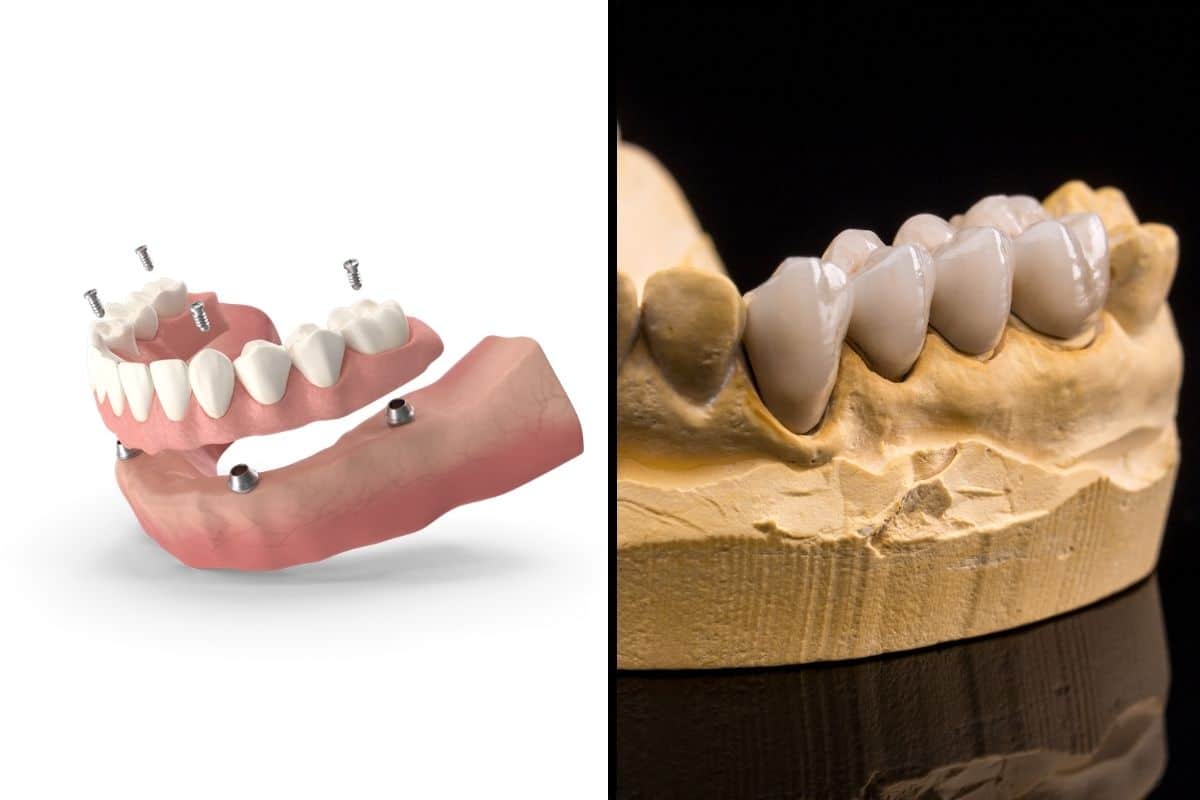
Losing a tooth can affect much more than your smile. A missing tooth can make chewing harder, allow nearby teeth to shift, and leave you wondering which replacement option will work best for your long-term oral health.
Dental implants and dental bridges can both replace missing teeth, but they work in very different ways. An implant replaces the missing tooth root and supports a crown, while a bridge uses neighboring teeth or implants to support one or more replacement teeth. The right choice depends on your oral health, bone structure, surrounding teeth, treatment goals, timeline, and budget.
At Stonehaven Dental & Orthodontics, we help patients look beyond the immediate gap and consider how each option will function and fit into their oral health for years to come.
Why Dental Implants?
Because an implant replaces the tooth root, it provides a stable foundation for the replacement tooth. Your dentist may recommend a bone graft if you do not have enough healthy jawbone to support an implant.
Dental implants can replace:
- One missing tooth
- Several missing teeth
- Multiple teeth using an implant-supported bridge
- Teeth as part of a full-arch restoration
Why Dental Bridge?
A traditional dental bridge replaces a missing tooth by placing an artificial tooth between dental crowns that attach to neighboring teeth. The adjacent teeth provide the support needed to hold the bridge in position.
A bridge does not require an implant to be placed into the jawbone, which can make treatment more straightforward for some patients.
However, traditional bridges typically require the supporting teeth to be prepared to receive crowns. That makes the condition and position of those neighboring teeth an important part of the treatment decision.
Dental Implants vs. Bridges: What Are the Differences?
| Dental Implants | Dental Bridges |
| Replace the missing tooth root | Use neighboring teeth for support |
| Usually require minor oral surgery | Usually do not require implant surgery |
| May require bone grafting | Do not require sufficient implant-supporting bone |
| Do not rely on neighboring natural teeth for support | Depend on healthy supporting teeth |
| Treatment can take several months | Treatment is often completed sooner |
| Require ongoing brushing, flossing, and dental care | Require careful cleaning around and beneath the bridge |
Neither option is automatically better for every patient. Your dentist needs to evaluate your teeth, gums, bite, jawbone, and overall treatment goals before recommending one.
Which Is Better: Dental Implants or Bridges?
For many patients, dental implants offer important long-term advantages because they replace the tooth root and do not require neighboring teeth to support the restoration. However, a dental bridge may be an excellent choice when you want a faster or less surgical tooth replacement option.
Here are some factors we consider during an evaluation.
1. The Health of Your Neighboring Teeth
If the teeth beside the missing tooth are strong and healthy, you may not want to alter them to support a traditional bridge.
An implant-supported crown stands independently, so it does not need neighboring natural teeth for support.
On the other hand, if the adjacent teeth already need crowns or substantial dental work, a bridge may make practical sense.
2. Your Jawbone
After tooth loss, the jawbone in the area can gradually change because it no longer receives stimulation from the natural tooth root.
An implant becomes integrated with the jawbone and acts as a replacement root. If you have experienced significant bone loss, we may need to discuss bone grafting or another approach before implant treatment.
3. Treatment Time
A dental bridge can generally be completed without waiting for an implant to integrate with the jawbone.
Dental implant treatment can take longer because the implant needs time to heal and integrate with the surrounding bone before the final restoration is placed.
If replacing your tooth quickly is a major priority, we will take that into account when discussing your options.
4. Long-Term Maintenance
Both bridges and implants require good oral hygiene and regular dental visits.
With a bridge, you need to clean carefully around the supporting teeth and beneath the replacement tooth. With an implant, you still need to brush and clean around the implant and crown just as you would care for your natural teeth.
Good daily hygiene and routine dental care help protect both your restoration and your remaining natural teeth.
5. Your Budget
Cost can vary considerably depending on the number of teeth being replaced, the condition of your existing teeth, the need for bone grafting, and the type of restoration.
Rather than choosing based on the initial price alone, we recommend considering the complete treatment plan, expected maintenance, and how each option fits your long-term needs.
Can You Get a Bridge Instead of a Dental Implant?
Yes. A dental bridge can be an effective way to replace a missing tooth, and it may be appropriate when an implant is not preferred or when the surrounding teeth provide suitable support.
Likewise, an implant may not be the best choice for every patient. Your dentist should evaluate your individual situation and explain reasonable alternatives before treatment. The American Dental Association recommends discussing the available treatment options based on a comprehensive dental examination and diagnosis.
How Do You Know Which Tooth Replacement Option Is Right for You?
There is no single answer to the question of dental implants vs. bridges.
We look at several factors, including:
- The number and location of missing teeth
- The health of your gums
- The condition of neighboring teeth
- Available jawbone
- Your bite and chewing habits
- Your desired treatment timeline
- Your ability to maintain the restoration
- Your long-term oral health goals
A careful examination gives us the information needed to recommend an option rather than simply choosing between an implant and bridge based on one factor.
Restore Your Missing Tooth With a Personalized Treatment Plan
If you are comparing dental implants vs. dental bridges, you do not have to make the decision on your own. Stonehaven Dental & Orthodontics will help you evaluate your missing tooth, surrounding teeth, gums, and overall oral health and explain which tooth replacement options may make sense for you.
Schedule a consultation with Stonehaven Dental & Orthodontics to discuss your tooth replacement options and find a solution designed around your smile, comfort, and long-term oral health.


Reviews From Our Patients
Krystle J.

Sammy, Connor, the front desk staff, Dental Hygenist and especially Dr. Town are amazing! It’s great to see the same faces everyone I get a cleaning! Sammy makes the experience comfortable and welcome. Connor may be quiet but he always does a great job! The dental hygienist always remembers me and my kids. Sorry I cant remember her name but she knows who I am and that’s what matters:) Thankful for this staff and the great care they give to my family!
Linda F.
I love it here. I have never seen a dental office give flowers to first timers. Everyone was so welcome if. In pain but you guys still made me smile. I told my daughter she need to come there. I love how you guys work with options of payment. Again thanks for making me smile in pain.
Emily C.
We’ve always had a good experience at Stonehaven. The women at the front desk are always cheerful and helpful. I love the hygienists, they always make my children and I feel comfortable and informed. I have pretty high dental anxiety and they’ve never tried to minimize my fears- but they listen to me, and help me feel as comfortable as possible. The dentists and orthodontists have been great! No issues at all. (I just wish my daughter was better at flossing, but we’re working on that!)
Yolanda R.
Oh my god, this doctor and staff are the best! They are friendly, they explained everything very thoroughly and made me feel very comfortable. The office is so clean and every one of the staff is so amazing especially Crystal! I recommend this dental office big time!!! Thank you Stonehaven Dental!!

Book Your Dental Appointment
Fill out the form and we'll follow up with a few appointment options.
"This is my first time at Stonehaven dental. Everyone was super friendly, and helpful. Dr Town came in and visited with me and together we developed a treatment plan to address the issues that were present on my teeth. Couldn't be more happy with the experience with everyone in the office!"