

Protect Your Molars with Dental Sealants
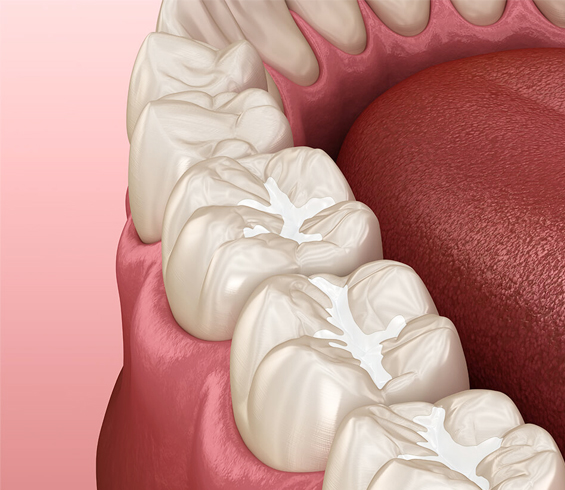
Sealants are thin layers of resin applied to the pits, fissures, and grooves of molars to prevent decay on these surfaces.
Most decay on back teeth begins in the grooves and pits of the chewing surfaces, particularly during the first few years after these teeth emerge. By sealing these areas with composite resins, we can effectively prevent this type of decay.
Sealants are among the most effective methods for preventing cavities on the surfaces where they are applied. While decay can still occur between teeth, sealants significantly lower the overall risk of cavities by protecting these vulnerable areas.
Cavity Prevention
Dental sealants can decrease cavity occurrence by 80% over two years and by 50% over four years effectively
Here’s how sealants achieve this remarkable protection
Dental sealants are highly effective in reducing the incidence of cavities, providing significant protection for your teeth. Research shows that sealants can decrease the likelihood of cavities by up to 80% over the first two years and by about 50% over a four-year period.
Barrier Against Decay
Sealants create a protective barrier over the pits and grooves of molars, which are particularly prone to cavities due to their complex surfaces. This barrier shields the enamel from bacteria and food particles that can lead to decay.
Durable Protection
The resin used in sealants is durable and adheres strongly to the tooth surface, providing long-lasting protection. As the sealant material hardens, it fills in the tiny crevices and grooves where plaque and food particles often get trapped, which reduces the risk of bacterial growth and decay.
Early Intervention
Sealants are most effective when applied shortly after the molars erupt, typically in children and adolescents. By sealing these surfaces early, sealants help prevent the onset of cavities during the crucial years when the risk is highest.
Long-Term Benefits
While sealants may need to be reapplied or touched up over time, their initial application provides significant reduction in cavity risk. This long-term benefit translates to fewer dental issues, less need for restorative work, and overall better oral health.
By incorporating dental sealants into your oral health routine, you can significantly decrease the chances of developing cavities, ensuring healthier teeth and reducing the need for more extensive dental treatments in the future.
Especially ideal for children
Children without dental sealants are three times more likely to develop cavities compared to those who have sealants.
Fast, painless, and simple application process
The thin coating is applied effortlessly in liquid form and solidifies in just about one minute. It's that easy!
Who can get dental sealants?
- School-age children
- Adults who are cavity-prone
- Anyone who wants an added layer of protection against decay!
What to expect from a dental sealant treatment at our office
A sealant can be thought of as a small plastic filling. However, numbing is typically not required since tooth enamel lacks nerves.
- We’ll start by examining the tooth or teeth to be sealed. If decay is found, we’ll remove it.
- Next, we’ll apply a solution that helps the sealing material better adhere to your tooth surface
- Time for the sealant! We’ll paint it on the tooth and use a special curing light as needed. That’s it!