


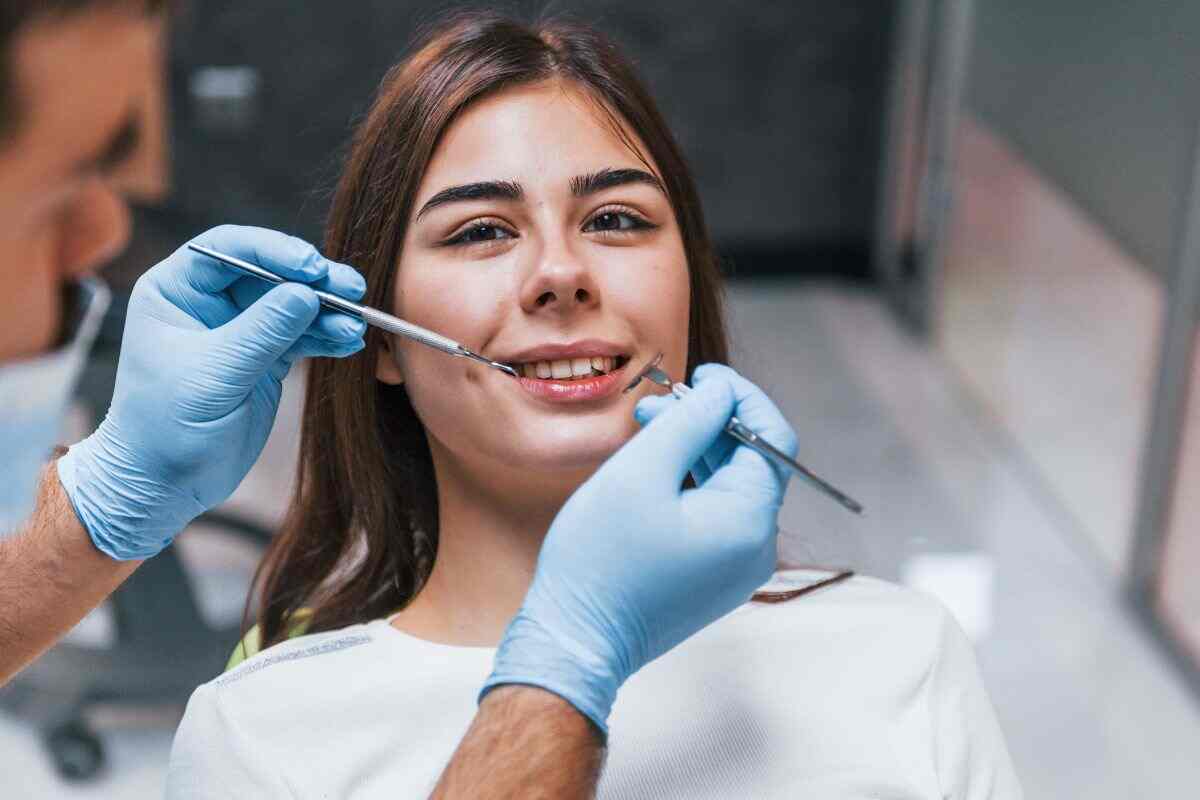
You don’t always know when something is wrong with your teeth. A cavity can grow without causing a toothache. Gum disease can get worse without much discomfort. Even a cracked tooth may look and feel normal at first.
That’s why we don’t want you to wait until something hurts before you come see us.
Dr. Charles Town, Dr. Daniel Bowcutt, and Dr. Zachary Pickup at Stonehaven Dental & Orthodontics offices looks for problems that aren’t always easy to spot at home. During a routine exam, we check your teeth, gums, bite, existing dental work, and the areas you may not think to look at yourself. Catching a problem early can often mean simpler treatment and a better chance of keeping your natural teeth healthy.
Here are 7 Dental Problems we may find before you notice anything is wrong.
1. Early Cavities
Most people expect a cavity to hurt. That’s not always how it starts.
Tooth decay can develop quietly, especially between teeth or in areas that are hard to see. You might brush and floss every day and still have a small cavity developing without realizing it.
During your exam, we look closely for signs of decay. When needed, we also use dental X-rays to check areas that we can’t see during a visual exam.
If we catch a cavity early, we can usually address it before decay reaches the deeper part of the tooth. Waiting until you have significant pain can mean a much bigger problem.
2. Gum Disease
Your gums can have a problem even when they don’t hurt.
Early gum disease, called gingivitis, can cause redness, swelling, tenderness, or bleeding when you brush or floss. Some people notice these signs, while others don’t think much of them.
We check your gums during your regular dental visits and look for inflammation, bleeding, gum recession, and changes around the teeth. We also measure the spaces between your gums and teeth when necessary.
If gum disease has progressed, it can affect the bone that holds your teeth in place. Finding it early gives us a better opportunity to get it under control.
3. Small Cracks in Your Teeth
A cracked tooth doesn’t always announce itself with sharp pain.
Small cracks can be difficult to see, particularly when they develop on the chewing surface or extend below the gumline. You may notice occasional sensitivity when you bite or drink something hot or cold, or you may not notice anything at all.
When we examine your teeth, we look for signs of cracks, worn areas, unusual sensitivity, and other changes that could point to a problem.
The sooner we find a damaged tooth, the sooner we can talk with you about protecting it. Depending on the crack, treatment might involve a filling, crown, or another restorative option.
4. Teeth Grinding and Clenching
Do you grind your teeth at night? You may have no idea that you’re doing it.
Many people clench or grind while they sleep. Over time, that pressure can wear down your enamel, chip teeth, damage fillings, and leave your jaw feeling sore.
We may spot signs of grinding during a routine exam. Flattened tooth surfaces, worn enamel, small fractures, and changes in your bite can all give us clues.
If we think you’re grinding your teeth, we’ll talk with you about what we’re seeing and whether a custom night guard or another approach could help protect your smile.
5. Trouble With an Old Filling or Crown
A filling or crown can work well for years, but dental work doesn’t last forever.
A filling may wear down or develop a crack. A crown can become loose or damaged. Decay can also develop around or underneath an older restoration.
You may not feel anything when one of these problems first starts.
That’s why we check your existing dental work during your regular exams. If we find a restoration that’s starting to fail, we can discuss whether it needs monitoring, repair, or replacement before the problem affects more of the tooth.
6. Bone Loss From Gum Disease
Some of the most important changes in your mouth happen where you can’t see them.
Advanced gum disease can damage the bone around your teeth. You won’t be able to look in the mirror and easily tell whether you’re losing supporting bone, and the process doesn’t always cause pain.
We evaluate your gums and supporting structures during your dental visits. When necessary, X-rays help us see what’s happening below the gumline.
Bone loss can eventually make teeth loose and can also create challenges if you need certain dental treatments later. Finding these changes early gives us a chance to address the underlying problem.
7. Unusual Changes in Your Mouth
A dental exam isn’t just about finding cavities.
We also look at your gums, tongue, cheeks, and other soft tissues in your mouth. We may notice sores, swelling, discoloration, irritation, or other changes that you haven’t paid attention to.
Most changes aren’t something to panic about. But if something looks unusual or doesn’t heal as expected, we may recommend keeping an eye on it or getting additional evaluation.
Having a dentist look at your entire mouth regularly gives you another layer of protection beyond what you can do at home.
Why Your Teeth Can Need Attention Even When They Feel Fine
One of the easiest dental appointments to put off is the one you don’t think you need.
If nothing hurts, it can be tempting to assume everything is fine. But many dental problems don’t cause noticeable symptoms in their early stages. By the time you develop a toothache, swelling, or significant sensitivity, the problem may already require more involved treatment.
That’s why we encourage regular dental exams even when your teeth feel perfectly normal.
Your daily habits still make a big difference. Brush twice a day, clean between your teeth, watch your sugar intake, and let us know if you notice anything unusual. Your routine dental visits allow us to look for the things you can’t easily see or feel yourself.
Keep Small Dental Problems From Becoming Big Ones
You don’t need to wait for a toothache before you call the dentist.
Stonehaven Dental & Orthodontics provides dental care for individuals and families throughout Burleson, Harker Heights, Killeen, and Waco. Whether you’re due for a routine checkup or it’s been longer than you’d like since your last visit, we’re here to help you understand what’s going on with your teeth and gums.
Schedule your dental checkup and let us help you catch problems while they’re still easier to manage.

Reviews From Our Patients
Krystle J.

Sammy, Connor, the front desk staff, Dental Hygenist and especially Dr. Town are amazing! It’s great to see the same faces everyone I get a cleaning! Sammy makes the experience comfortable and welcome. Connor may be quiet but he always does a great job! The dental hygienist always remembers me and my kids. Sorry I cant remember her name but she knows who I am and that’s what matters:) Thankful for this staff and the great care they give to my family!
Linda F.
I love it here. I have never seen a dental office give flowers to first timers. Everyone was so welcome if. In pain but you guys still made me smile. I told my daughter she need to come there. I love how you guys work with options of payment. Again thanks for making me smile in pain.
Emily C.
We’ve always had a good experience at Stonehaven. The women at the front desk are always cheerful and helpful. I love the hygienists, they always make my children and I feel comfortable and informed. I have pretty high dental anxiety and they’ve never tried to minimize my fears- but they listen to me, and help me feel as comfortable as possible. The dentists and orthodontists have been great! No issues at all. (I just wish my daughter was better at flossing, but we’re working on that!)
Yolanda R.
Oh my god, this doctor and staff are the best! They are friendly, they explained everything very thoroughly and made me feel very comfortable. The office is so clean and every one of the staff is so amazing especially Crystal! I recommend this dental office big time!!! Thank you Stonehaven Dental!!

Book Your Dental Appointment
Fill out the form and we'll follow up with a few appointment options.
"This is my first time at Stonehaven dental. Everyone was super friendly, and helpful. Dr Town came in and visited with me and together we developed a treatment plan to address the issues that were present on my teeth. Couldn't be more happy with the experience with everyone in the office!"