

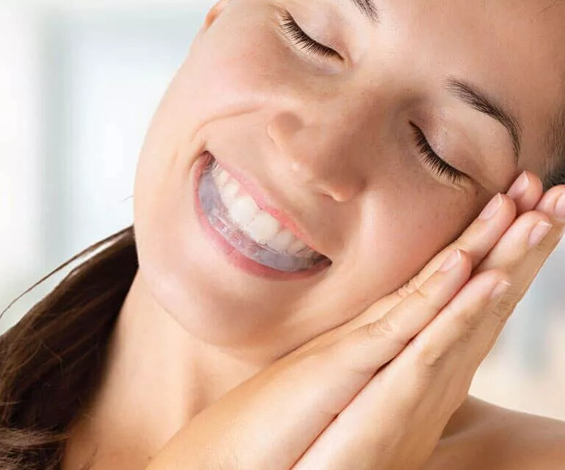
Protect Your Smile at Night: Custom Night Guards
Night or dental guards are crucial for protecting your teeth from grinding damage. Made from durable acrylic resin, they come in soft and hard options. Your dentist will recommend using a night guard over your upper teeth to prevent contact between your upper and lower teeth during sleep. For severe grinding, a lower teeth guard might also be suggested. Night guards also cushion your jaw muscles, alleviating discomfort caused by grinding.
Advantages of Night Guards for Bruxism
Bruxism, or teeth grinding, often happens unconsciously due to stress, anxiety, or anger and can occur both day and night. This habit can significantly harm your oral health. To protect your teeth, dentists may recommend using a night guard alongside treatments for anxiety or stress.
Though night guards won't eliminate bruxism, they can prevent damage to fillings, reduce tooth chipping, and minimize excessive enamel wear. Additionally, they may improve sleep quality and relieve symptoms associated with grinding.
- Tooth Sensitivity or Discomfort: Increased sensitivity or discomfort in your teeth, especially when consuming hot or cold foods and beverages.
- Biting the Cheeks: Accidental biting of the cheeks while chewing or talking, leading to irritation and sores.
- Receding Gums: Gums pulling away from the teeth, exposing tooth roots and potentially causing sensitivity.
- Fatigue from Interrupted Sleep: Feeling tired due to frequent sleep disruptions caused by grinding or clenching
- Facial Discomfort: Soreness or tightness in the jaw muscles, which may radiate to the face and cause overall discomfort
- Temple Headaches: Headaches around the temples are often associated with jaw clenching and bruxism
The Benefits of Using Night Guards for TMJ
The temporomandibular joints (TMJ) control the movement of your jaw. Teeth grinding can cause TMJ disorders, leading to symptoms like jaw pain, clicking or popping sounds, and a locked jaw. Night guards can help alleviate these issues by properly aligning your jaw and reducing muscle tension during sleep. They may also relieve other TMJ symptoms, such as:
- Facial Pain or Discomfort: Ongoing pain or soreness in the face, often due to TMJ issues.
- Neck and Shoulder Pain: Tension or pain in the neck and shoulders, which may result from jaw problems.
- Pain Inside the Ear and Discomfort: Intense discomfort that feels like an ear-ache caused by TMJ-related inflammation.
- Ringing in the Ears: A ringing or buzzing sound in the ears, known as tinnitus, linked to TMJ disorders.
- Difficulty Chewing or Speaking: Problems with chewing or speaking clearly due to jaw stiffness or misalignment.
- Discomfort While Eating or Talking: Pain or discomfort during eating or talking related to TMJ issues.